
How Volatility Impacts Prop Trading Evaluations
November 13, 2025
Volatility in markets can be both an opportunity and a challenge for prop traders. It creates chances for higher profits but also increases risks, especially during trading evaluations with strict rules. Here's what you need to know:
- Market Swings Defined: Volatility measures how much and how quickly prices move. Tools like the VIX (above 25 = high volatility) and ATR help track this.
- Impact on Evaluations: Big price swings can trigger stop-losses or violate daily loss limits (e.g., 5% caps), leading to failed tests. However, traders with strong risk management often succeed in volatile times.
- Key Risk Strategies:
- Adjust position sizes when volatility rises.
- Use wider stop-losses to avoid premature exits.
- Diversify trades across assets to reduce exposure.
- Emotional Challenges: Fast-moving markets can lead to overtrading or abandoning plans. Staying disciplined is essential.
- Platform Support: Tools like static drawdowns, no trailing limits, and fast payouts (e.g., under 4 hours) from platforms like TradersYard help traders manage risks.
Volatile markets test both strategy and mindset. Success lies in preparation, discipline, and leveraging the right tools.
The only RISK MANAGEMENT for Prop Firms video you will ever need
How Ups and Downs Change How Traders Do
Market ups and downs can really change how well a trader does in tests. The very things that make it possible to win big can also make it easy to lose big. It's key to get this to do well when trading for a test.
More Money vs. Bigger Losses
Wild markets cut both ways. They let you make a lot more money but also up the risk. For example, a move that might make a 2% gain in a calm market might jump to 5% when things are wild. But, the lower side is just as big, with bad price moves doing the same thing [2][3][7].
For prop traders with hard daily loss rules, this is a big test. While a wild week might let them make double per day, it also could make them hit loss stops more [2][6][7]. Yet, traders who stick to the rules often do well when things go wild. In a big jump in early April, only 7% of places had losses [5]. The trick is to handle risk well - change how big you go and think again about your calm market plans. This play between risk and win shows the mind and plan tests traders need to pass.
Mind and Heart Tests
More than just numbers, wild markets test how calm a trader can stay. Quick price moves can spark FOMO (fear of missing out), leading to too much trading or waiting, which can mess up even the best plans [3][6]. For traders trying to meet test needs, this stress can make them make big mistakes, like dropping plans or going back to get lost money. These mind tests can hit as hard as the market's ups and downs.
Why Staying on Track is Key in Wild Times
In unsure markets, staying on track is a trader's best tool. Keeping to a trading plan, sticking to risk rules, and meeting test needs are key to do well [2][3][6].
TradersYard, for one, shows how key staying on track is in its tests. Traders must show they know both trading and risk rules well before they can move on to the next test phase [1].
"Complete our trading evaluation to demonstrate your skills and risk management abilities." - TradersYard [1]
The best traders see wild times as a check on their plans, not their feelings. They stick to their set rules for cut-loss points, how big to go, and day caps, even when markets move fast. Just as key, they know when to pull back. Those who know a lot often sit out when things get too shaky, aiming to keep their money safe instead of going after each chance. This strict way of thinking is what makes them stand out in rough markets.
How to Manage Risk in Wild Markets
When markets get real wild, handling risk well is key. Ways that do fine when things are calm may not work when prices jump all over. In these times, keeping your money safe is most needed, and changing how you do things is vital.
Simple Tools for Managing Risk
Big ups and downs in the market can test traders a lot. So, good tools for managing risk are a must. One big tool is position sizing. When price moves get bigger, cutting down how much you trade helps control risk. For example, if an asset's Average True Range (ATR) doubles, traders might cut their trade sizes in half and change their stop-loss points to deal with the bigger swings.
Stop-loss orders are another key tool. These stop your losses, but in wild markets, setting wider stop-loss ranges can keep trades from ending too soon because of normal ups and downs.
Spreading out investments over different assets or markets is also smart. This way, bad moves in one area won't hurt as much.
Get Ready for Different Market Times
Being ready matters when markets can't be guessed. Scenario analysis helps traders think about different situations, like surprise changes in interest rates or bad company news. By thinking about these things before they happen, traders can find weak spots in their plans and make backup plans.
Stress testing goes deeper by seeing how things might go under extreme conditions - like sudden big drops or quick policy changes. For instance, traders can see how their money might do if the market falls by 5%, 10%, or 20% in one day. This helps them change risk rules and trade sizes to deal better with long bumpy times.
How TradersYard Helps With Risk
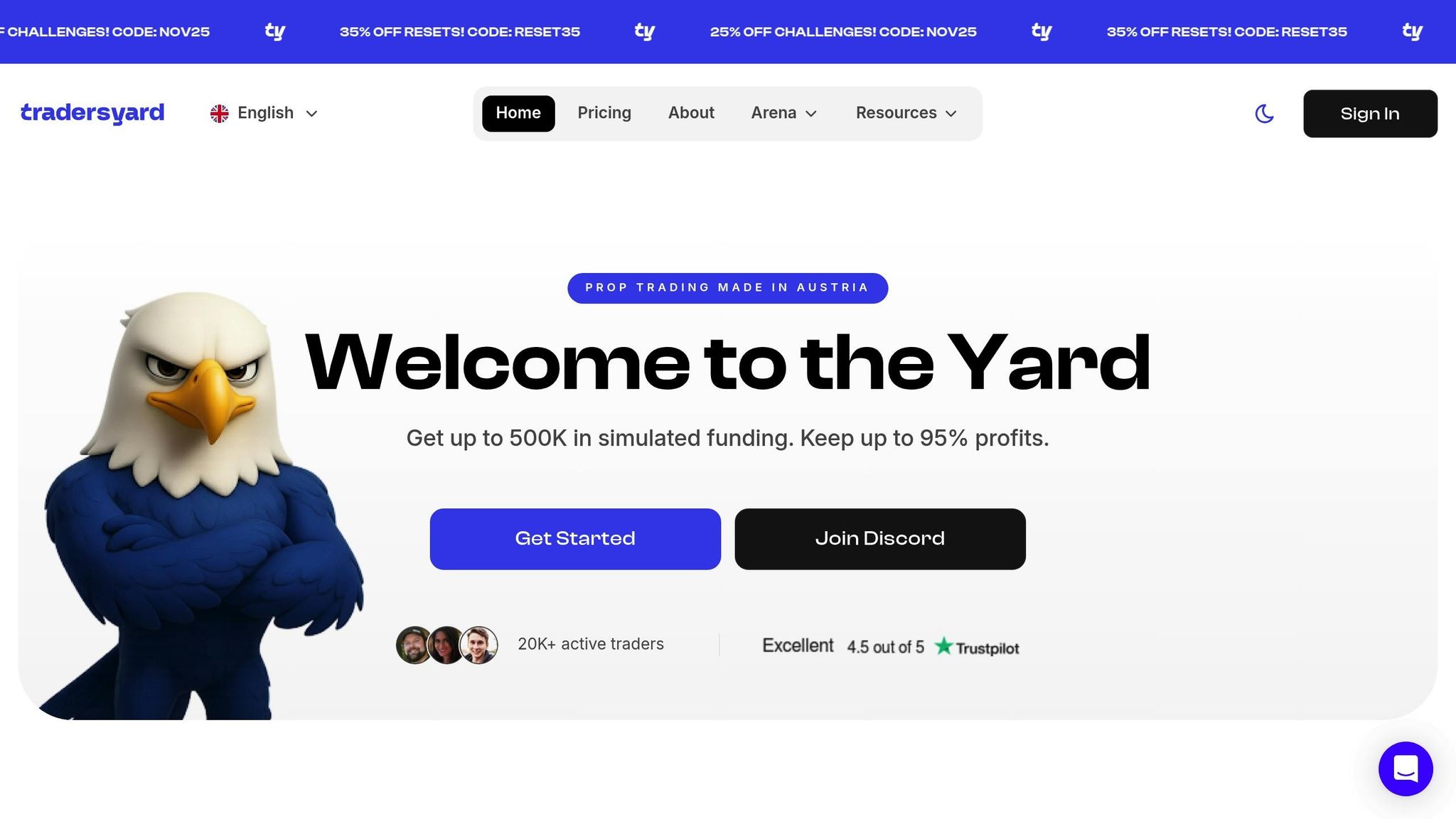
Platforms like TradersYard give tools made to help traders when things get shaky. A top feature is the static drawdown way, which keeps a set max loss limit based on the start balance. This means that risk levels stay the same, even as profits grow. Another safety is the 5% daily loss limit, working like a brake to stop too much loss in crazy trading times.
A cool part is the platform's no trailing drawdown rule. Unlike ways where the drawdown limit gets tighter as your money grows, TradersYard keeps the drawdown limit steady. This lets traders handle risk without the worry of tighter limits. The platform also has clear rules, like a 10% max drawdown and the 5% daily loss rule, to give a strong structure for managing risk.
Also, TradersYard backs ways like trading the news and holding trades over the weekend. Having a steady drawdown rule and daily loss limits lets traders try these ways while keeping within clear risk limits.
sbb-itb-1dce033
Changing How We Trade When Markets Go Wild
When markets get very wild, using the same old trade ways may not work well. Smart traders know they must change their plans to fit the wildness, not fight it. This change helps them not just get through the tough times - they also meet goals and handle risks well.
Trade Ways That Do Well in Wild Times
Some trade styles do better when things get wild. Mean reversion thinks prices will go back to normal after they move a lot. On the other hand, momentum trading uses big moves that often start with big news or sudden changes. These ways are key in prop trading tests, where acting right in new situations can decide if a trader does well or fails.
For those who like to be fast and exact, trading with algorithms gives a plus. These can make trades super fast, cut down on emotional choices, and use quick changes in the market [2][8].
Changing How Much We Bet and Borrow
When things are wild, how much you bet becomes very key. Many traders bet less - for example, from 2% of their money per trade to 1% or even less. This careful way helps keep big losses in check [2][8][4].
Places like TradersYard set a fixed 1:30 borrow limit for CFD accounts [1]. With set rules for losing too much, traders must be smart about how much they bet to stay in the safe zone during wild times. Another move? Making stop-loss levels bigger. This lets trades move more in noisy markets, and it's best used with smaller bet sizes to not risk too much [8].
Using Live Data and Automation
In wild markets, having live data is key. Prices can change fast, so staying up-to-date is a must [2]. Automation goes one step more by making trades based on set rules - like stop-loss orders, profit targets, and how much to bet - right away. This cuts out emotional mistakes.
TradersYard’s tools give live updates and automatic risk checks, helping traders keep to test rules and avoid slip-ups. Some traders even put in automatic limits to stop too much trading in these wild times [8]. These tools not only make deciding easier but also keep discipline when it’s most needed.
Easy Tools for Rough Market Times
Trade hubs need to give traders ways to deal with rough market times. Great platforms help traders - they offer tools and safety steps that help, not hurt, when the market is wild.
How Reviews Look at Market Jumps
Smart trade hubs set up their tests knowing markets can jump. They make rules to keep traders safe while checking how well they do under real trade stress. Tight risk checks, like daily loss maxes and big trade size limits, are key in these tests, making sure traders don't run their money dry during big price moves.
Instead of just looking at gains, many hubs now look at risk-first gains. This means traders who keep money safe and make smart choices get points, even if they don't make the most money. It's a move to value clever trading more than risky moves.
Some hubs do more by bringing in "changeable risk" rules, where loss limits change based on how the market is right now. This gives traders more room to move in wild times while keeping tight risk checks. The goal isn't to make trading easy but to set up tests that are fair and true to life.
TradersYard has added these ideas and made tools to help traders in wild markets well.
TradersYard's Tools for Wild Markets
TradersYard made its hub to back traders in wild times. A top tool is its set loss system, which lets traders come back from market jumps without failing a test.
Every account has a 5% daily loss max and a 10% most drawdown, giving a good plan for risk control. TradersYard also lets people trade on news times and hold over weekends, letting traders play during big news that often makes the market jump.
To keep risk in check, the hub keeps a 1:30 lever rule on all CFD accounts. With its no least trade days rule, traders can wait for good times instead of trading in messy times.
Quick payouts and profit shares of up to 95% let traders use gains fast in wild times. Also, programs that grow with good steady work give more money to traders who show they can deal with rough markets.
Account Choices for Rough Markets
TradersYard’s tools work for all account kinds, giving risk plans fit for traders at all skill levels and money sizes.
| Money Amount | One Fee | Good for Shaky Trade Times | Main Plus |
|---|---|---|---|
| $5,000 | $39 | New, safe traders | Cheap to try plans |
| $10,000 | $79 | Mid-level traders | Mix of risk and chance |
| $25,000 | $149 | Skilled traders | More room to change size |
| $50,000 | $249 | High-level plans | More ways to spread out |
| $100,000 | $499 | Expert moves | Top room for tough plans |
Small accounts ($5,000-$10,000) work well for new traders or those who like safe plays. With less room for mistakes, these accounts are good for learning how to keep risks low without risking a lot of money.
Big accounts ($50,000-$100,000) are for those who have been trading for a long time and need more room to try different things. These accounts let you use big plans, like mixing types of trades, which can keep risks low while still giving you chances to win big when markets jump.
Preparing for Success in Volatile Markets
Navigating volatile markets requires a mix of solid preparation, reliable tools, and platforms that genuinely support traders.
Key Steps for Traders
The first step is creating a well-thought-out plan before market turbulence strikes. For instance, using tools like the Average True Range (ATR) to adjust trade sizes based on market conditions can help limit losses by around 20%, as noted in a 2024 MIT study [9]. Many traders also rely on volatility filters - indicators like the VIX or ATR - to identify high-risk periods, reducing losses by 17% when combined with strict daily loss limits [9]. For a $100,000 account, this could mean capping daily losses at $5,000 and total losses at $10,000 [9]. Following such guidelines has helped traders pass their initial evaluation phase in just 8–9 days, while others who ignored market volatility often found themselves starting over [9].
Breakout trading is another strategy that thrives in volatile markets. A 2024 CME Group study revealed that breakout strategies can increase win rates by 18% during such periods [9]. This approach focuses on spotting price movements that break beyond usual ranges, allowing traders to ride the momentum and complete phase one evaluations in about nine days. Beyond strategies, managing emotions is equally critical - tools like automated alerts and keeping a trading journal can help traders stay objective and learn how volatility affects their performance [9].
These tactics form a strong foundation for success, especially when paired with the support of platforms like TradersYard.
How TradersYard Supports Traders
TradersYard’s evaluation system is built to complement these strategies, offering features tailored for navigating volatile markets. The platform's risk management framework aligns with these approaches, allowing traders to hold positions over weekends and trade during news events.
"We focus on transparency and speed. No hidden rules, lightning-fast payouts under 4 hours, and the most sought after feature - no trailing drawdown."
– TradersYard [1]
With payouts processed in under four hours and profit shares reaching up to 95%, traders can quickly access their earnings, even in high-volatility periods. The platform's scaling program rewards consistent performance by increasing trading capital, giving traders more room to grow.
TradersYard’s clear, straightforward rules and absence of hidden fees ensure traders can focus on managing risk and executing smart trades. Dominic Mang, a trader, shares his experience:
"Trading with TradersYard has been a game-changer for me. Their clear rules and no hidden fees made it easy to focus on growing my account. Plus, the support team is always there when I need them." [1]
Additionally, the platform’s zero minimum trading days policy allows traders to wait for favorable conditions instead of forcing trades during extreme volatility. This balance of flexibility and structure equips traders with the tools and experience needed to succeed in any market environment.
FAQs
What strategies can prop traders use to manage risk during times of high market volatility?
Managing risk during times of high market volatility calls for a focused mindset and smart strategies. Prop traders can mitigate potential losses by reducing their position sizes, which helps limit exposure to sharp price movements.
Using stop-loss orders is another essential step, as it sets a safety net to prevent substantial losses. Establishing clear risk limits is equally important to keep trading decisions under control. Staying on top of key market indicators, keeping up with economic developments, and ensuring a diverse portfolio are additional ways to handle unpredictable market conditions with greater confidence.
Platforms like TradersYard provide structured evaluations, clear guidelines, and practical tools designed to assist traders in managing risks while gearing up for live trading situations.
How can traders manage emotions like overtrading during volatile markets?
Managing emotions during volatile markets is a key part of staying steady and effective as a trader. To keep overtrading at bay, consider strategies like setting clear trading limits, following a well-thought-out plan, and using stop-loss orders to manage risk effectively.
Taking care of your mental state is just as important. Practicing mindfulness and stepping away for regular breaks can help you stay calm and collected. Shifting your focus to long-term goals instead of getting caught up in short-term market swings can also prevent hasty, emotional decisions. Platforms such as TradersYard offer structured evaluation tools that promote disciplined trading and help traders stay aligned with their strategies.
How does TradersYard help traders manage risk during volatile markets?
TradersYard helps traders tackle the challenges of volatile markets by providing a clear and structured evaluation process with straightforward rules. This system allows traders to concentrate on refining their strategies while staying disciplined and managing risks efficiently.
The platform also includes features like no trailing drawdown, giving traders the flexibility to navigate market ups and downs without extra limitations. Alongside quick payouts and scaling programs, TradersYard offers traders the resources they need to thrive in ever-changing trading conditions.